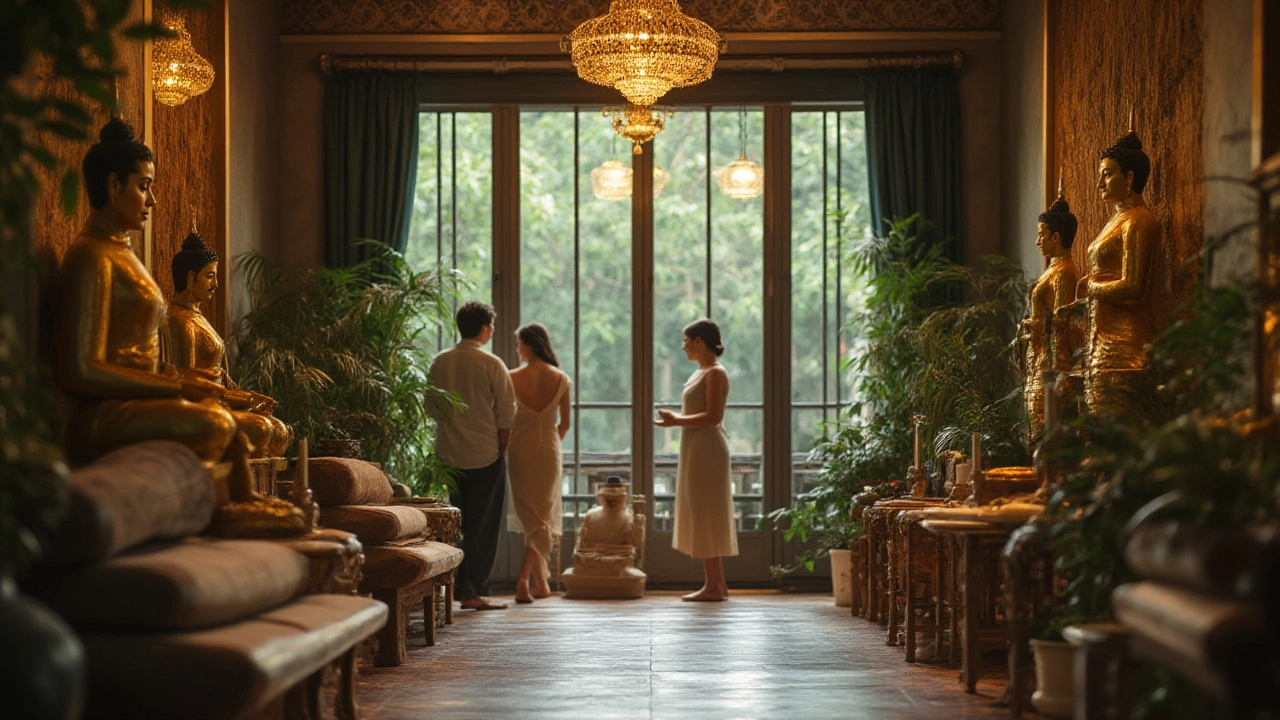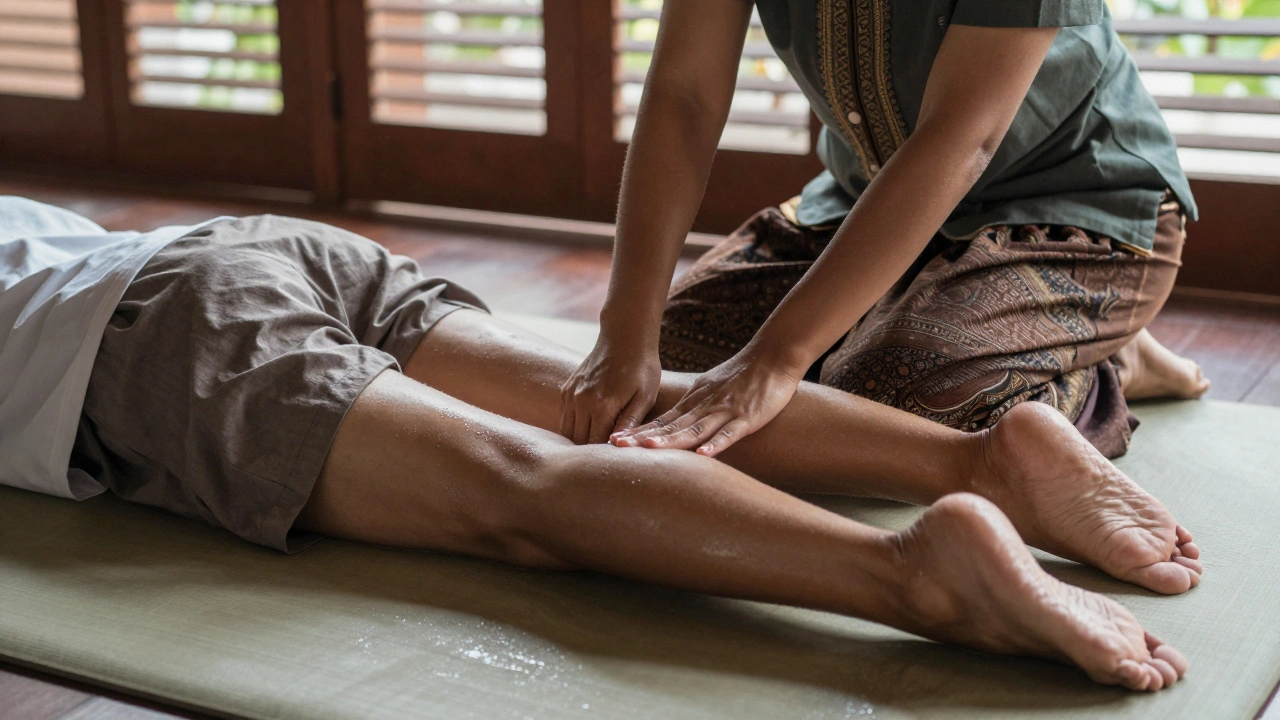
You’ve probably seen it in movies: someone lying on a mat while a therapist uses their hands, feet, and body to stretch them like a human pretzel. It looks intense. Maybe even a little scary. But if you’ve ever woken up with stiff shoulders, a tight lower back, or just that dull, constant ache that won’t go away, you might be surprised how much Thai massage can help.
What Thai Massage Actually Is (And Why It’s Not Just a Stretch)
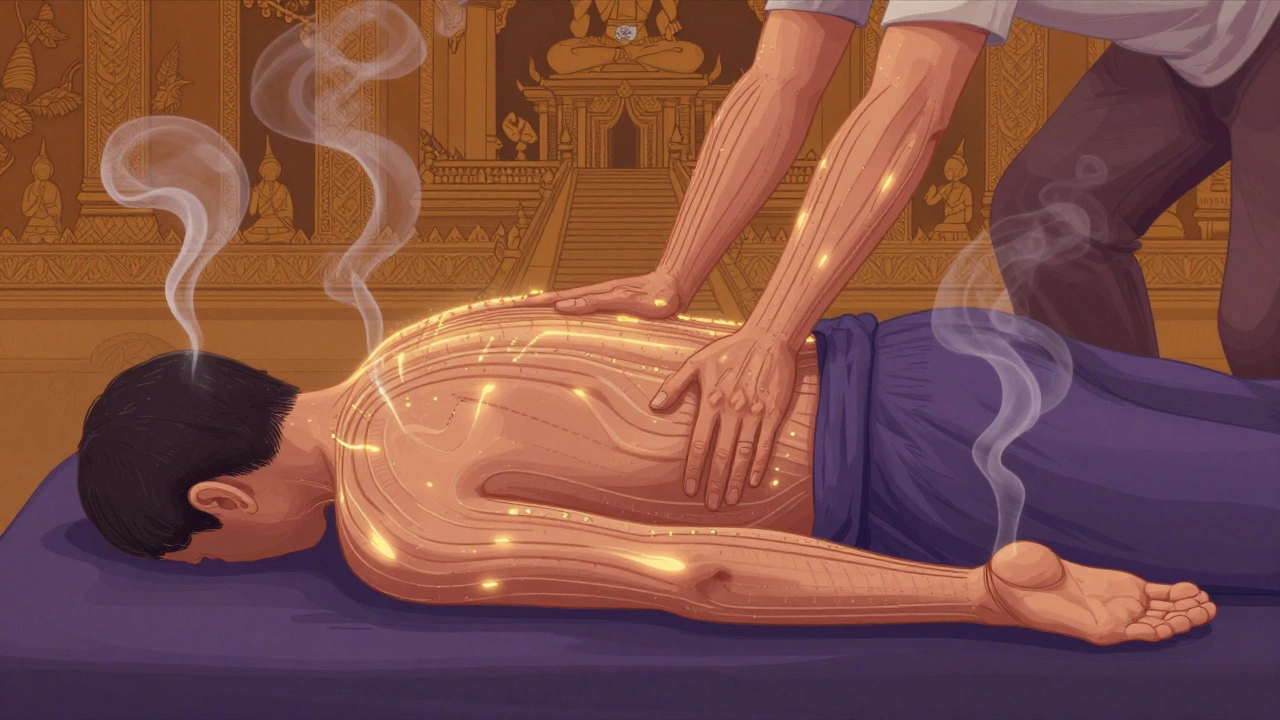
Thai massage isn’t just a fancy stretch session. It’s a 2,500-year-old healing system from Thailand that combines acupressure, assisted yoga postures, and deep muscle compression. Unlike Swedish massage, where you lie still and get rubbed, Thai massage happens on a mat on the floor. You stay fully clothed-no oils, no nudity. The therapist moves you through a series of stretches while applying rhythmic pressure along energy lines called sen lines.
Think of it like yoga, but someone else is doing the heavy lifting. You don’t have to be flexible. You don’t even have to try. The therapist adjusts every movement to your body’s limits. It’s not about pushing you deeper-it’s about helping your body open up naturally.
It’s not just relaxation. It’s rehabilitation. People who sit all day at desks, runners with tight hips, even office workers with chronic neck pain-many report feeling like their body finally "remembered" how to move properly after just one session.
How Thai Massage Improves Flexibility
Flexibility isn’t just about touching your toes. It’s about moving without pain. Without restriction. Without that constant feeling that your muscles are wrapped in rubber bands.
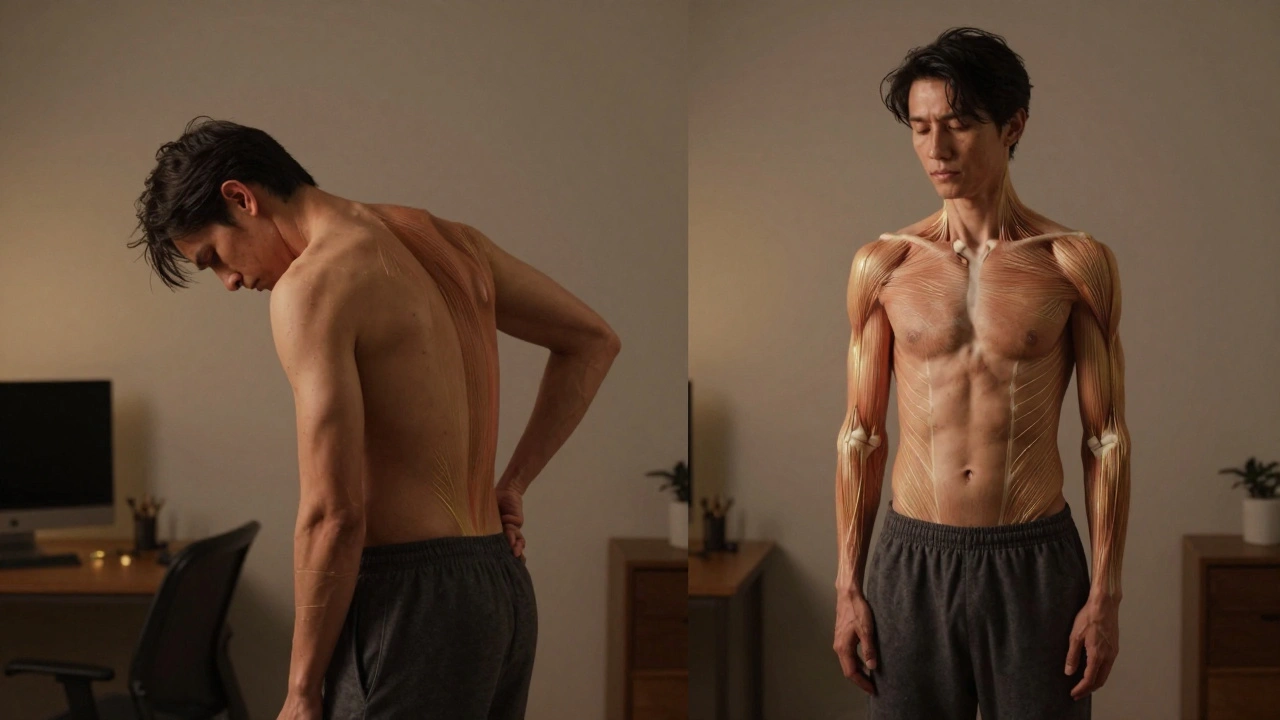
Thai massage works on your fascia-the connective tissue that wraps around every muscle, bone, and organ. When you sit too long or move poorly, fascia gets sticky and tight. That’s what makes you feel stiff in the morning or after a long flight.
The therapist uses slow, deep stretches that gently pull and release this tissue. A common move is the "hip opener," where they use their foot to press into your hip while guiding your leg into a gentle stretch. It feels intense, but not painful. Afterward, you might notice you can turn your head easier, bend down to tie your shoes without groaning, or reach for that top shelf without wincing.
A 2020 study in the Journal of Bodywork and Movement Therapies found that participants who received weekly Thai massage for six weeks improved their hamstring flexibility by 32%-without doing a single yoga pose on their own.
How Thai Massage Reduces Pain
Pain isn’t always about injury. Sometimes it’s just your nervous system screaming because your body’s been stuck in the same position for too long. Thai massage interrupts that signal.
The rhythmic pressure applied along the sen lines stimulates blood flow and triggers your body’s natural painkillers-endorphins and enkephalins. It’s like hitting a reset button on your nerves.
People with lower back pain often feel relief after just one session. Why? Because Thai massage doesn’t just massage the back. It works on the hips, legs, and even the feet-areas that pull on the spine. Tight hamstrings? They tug on your pelvis. Tight calves? They change how you stand. Thai massage untangles those chains.
One woman in London, a graphic designer with chronic sciatica, started going twice a month. "I used to need painkillers just to walk to the bus," she told me. "Now I can walk 30 minutes without thinking about it. It’s not magic. It’s mechanics. My body just needed to be put back in alignment."
What Happens During a Thai Massage Session
You’ll lie on a thick mat on the floor, wearing loose, comfortable clothes-no need to change. The therapist will start at your feet and work their way up, using palms, thumbs, elbows, knees, and even feet to apply pressure.
There’s no talking. No music blasting. Just quiet, rhythmic movement. You’ll be guided into stretches you didn’t know you could do. Some feel like a deep yoga pose. Others feel like someone’s gently pulling your bones apart-then letting them settle back in.
The whole session lasts 60 to 90 minutes. You won’t feel sore afterward like you do after a tough workout. Instead, you’ll feel like your body has been reset. Light. Loosened. Alive.
Thai Massage vs. Other Massage Types
| Feature | Thai Massage | Swedish Massage | Deep Tissue |
|---|---|---|---|
| Location | Floor mat | Massage table | Massage table |
| Clothing | Full clothing | Undressed (covered with towel) | Undressed (covered with towel) |
| Pressure | Deep, rhythmic, active | Light to medium, flowing | Very deep, focused |
| Movement | You’re moved through stretches | You lie still | You lie still |
| Best for | Flexibility, chronic tension, posture | Relaxation, stress relief | Specific muscle knots, injury recovery |
| After-effect | Light, mobile, energized | Relaxed, calm | Sore, then better |
Thai massage is the only one that actively repositions your body. That’s why it’s so effective for long-term flexibility and pain relief. Swedish massage feels nice. Deep tissue hurts and helps. Thai massage changes how your body moves.
Where to Find Authentic Thai Massage in London
You don’t need to fly to Bangkok. London has dozens of places offering real Thai massage. Look for places that say "traditional Thai massage" or "Northern Thai style." Avoid places that just call it "Thai-style"-those are often just Swedish with some stretching thrown in.
Some trusted spots in London:
- Thai House Spa (Soho) - Run by therapists trained in Chiang Mai. Authentic techniques, no frills.
- Wat Thai London (Southwark) - Run by Buddhist monks and certified practitioners. Focus on healing, not just relaxation.
- Chiang Mai Massage Studio (Camden) - Offers 90-minute sessions with full-body stretching and pressure work.
Check reviews for mentions of "stretching," "no oils," or "floor mat." That’s your sign it’s real.
How Often Should You Get Thai Massage?
One session can give you relief. But if you want lasting change, consistency matters.
For chronic pain or stiffness: once a week for 4-6 weeks, then every two weeks.
For maintenance: once a month. That’s like an oil change for your body.
Some athletes swear by it twice a week during training season. Office workers often find that biweekly sessions keep their posture from collapsing.
There’s no rush. Your body will tell you when it needs more. If you feel lighter, looser, and more mobile after a session, you’re on the right track.
Safety Tips: What to Watch Out For
Thai massage is safe for most people-but not everyone.
- Avoid if you have: Recent fractures, severe osteoporosis, open wounds, or active blood clots.
- Tell your therapist: If you’re pregnant, have high blood pressure, or any joint replacements.
- Speak up: If something hurts too much, say so. It should feel intense, not sharp or burning.
- Hydrate: Drink water after. Your body releases toxins during the session.
Most people feel great afterward. But if you feel dizzy, nauseous, or overly sore for more than 48 hours, it might be too intense. Find a gentler therapist.
Frequently Asked Questions
Does Thai massage hurt?
It can feel intense, but it shouldn’t hurt. You might feel a deep burn or stretch, but sharp pain means the therapist is going too far. A good therapist adjusts to your comfort level. If you’re new, start with a 60-minute session and communicate openly.
Can Thai massage help with sciatica?
Yes. Sciatica often comes from tight glutes, hamstrings, or piriformis muscles pulling on the sciatic nerve. Thai massage releases those muscles and reduces pressure on the nerve. Many people report reduced numbness and shooting pain after just a few sessions.
Do I need to be flexible to try Thai massage?
Not at all. In fact, if you’re stiff, you’re the perfect candidate. The therapist works with your current range of motion. You don’t have to do anything. They move you. You just breathe.
How long do the effects last?
After one session, you’ll feel looser for 3-5 days. With regular sessions, the improvements build. Flexibility and pain relief become more permanent as your body learns new movement patterns. Think of it like learning to ride a bike-you don’t forget once you’ve got it.
Is Thai massage worth the price?
In London, prices range from £50-£90 for 60-90 minutes. Compared to physiotherapy (which can cost £70+ per session and requires multiple visits), Thai massage gives you both relaxation and functional improvement in one go. If you’re dealing with chronic stiffness or pain, it’s one of the most cost-effective therapies available.
If you’ve been living with tight muscles, stiff joints, or nagging pain, Thai massage isn’t just another spa treat. It’s a tool to reclaim your body’s natural movement. You don’t need to be an athlete. You don’t need to be flexible. You just need to be willing to let someone help you move again.
Book your first session. Lie down. Breathe. Let your body remember what it feels like to be free.