You’ve had one of those weeks-sleepless nights, endless meetings, that constant low hum of stress in your shoulders. You’ve tried breathing exercises, scrolling through calming videos, even that expensive candle that smells like ‘serenity’ but just makes you sneeze. What if the answer isn’t another app or another gadget, but something ancient, hands-on, and deeply human? Thai massage isn’t just a luxury spa treat-it’s a powerful tool you can bring into your daily self-care, even without stepping into a studio.
What Exactly Is Thai Massage?
Thai massage isn’t like a Swedish massage where you lie still and get rubbed with oil. It’s more like a guided yoga session where someone else moves you. Developed over 2,500 years ago in Thailand, it combines acupressure, assisted stretching, and rhythmic compression. Practitioners use their hands, thumbs, elbows, knees, and even feet to apply pressure along energy lines-called sen lines-while guiding your body through gentle poses.
Think of it as a full-body tune-up. No oils. No undressing. You wear loose, comfortable clothes. The therapist doesn’t just work on tight muscles-they reset your posture, improve joint mobility, and help your nervous system switch from fight-or-flight to rest-and-digest mode. It’s not just relaxation. It’s restoration.
Why Thai Massage Belongs in Your Self-Care Routine
Self-care isn’t just bubble baths and face masks. Real self-care is about repairing your body’s wear and tear before it turns into pain. Thai massage does that in ways few other practices can.
Studies from the Journal of Bodywork and Movement Therapies show that regular Thai massage reduces cortisol levels-the main stress hormone-by up to 40% after just one session. That’s not placebo. That’s biology.
Imagine this: You sit at a desk for eight hours. Your hips lock up. Your lower back tightens. Your neck feels like it’s holding a brick. A Thai massage session can open your hips, release your spine, and loosen your shoulders-all in 60 to 90 minutes. You walk out feeling taller, lighter, and calmer. That’s not magic. That’s biomechanics.
And here’s the kicker: you don’t need to go to a spa to get this. You can learn simple techniques to do on yourself-or with a partner-right at home.
How to Bring Thai Massage Into Your Daily Life
You don’t need a certification to start reaping the benefits. Here’s how to weave Thai massage principles into your routine-step by step.
1. Start with a 5-Minute Morning Flow
Before you check your phone, sit on the floor or your bed. Gently pull one knee toward your chest and hold for 20 seconds. Switch sides. Then, do seated spinal twists-turn your torso slowly to the right, left hand on right knee, right hand behind you. Breathe into the twist. Hold. Repeat.
This mimics the foundational stretches used in Thai massage. It wakes up your spine, improves circulation, and signals to your body: ‘Today, I’m taking care of you.’
2. Use a Massage Ball for Acupressure
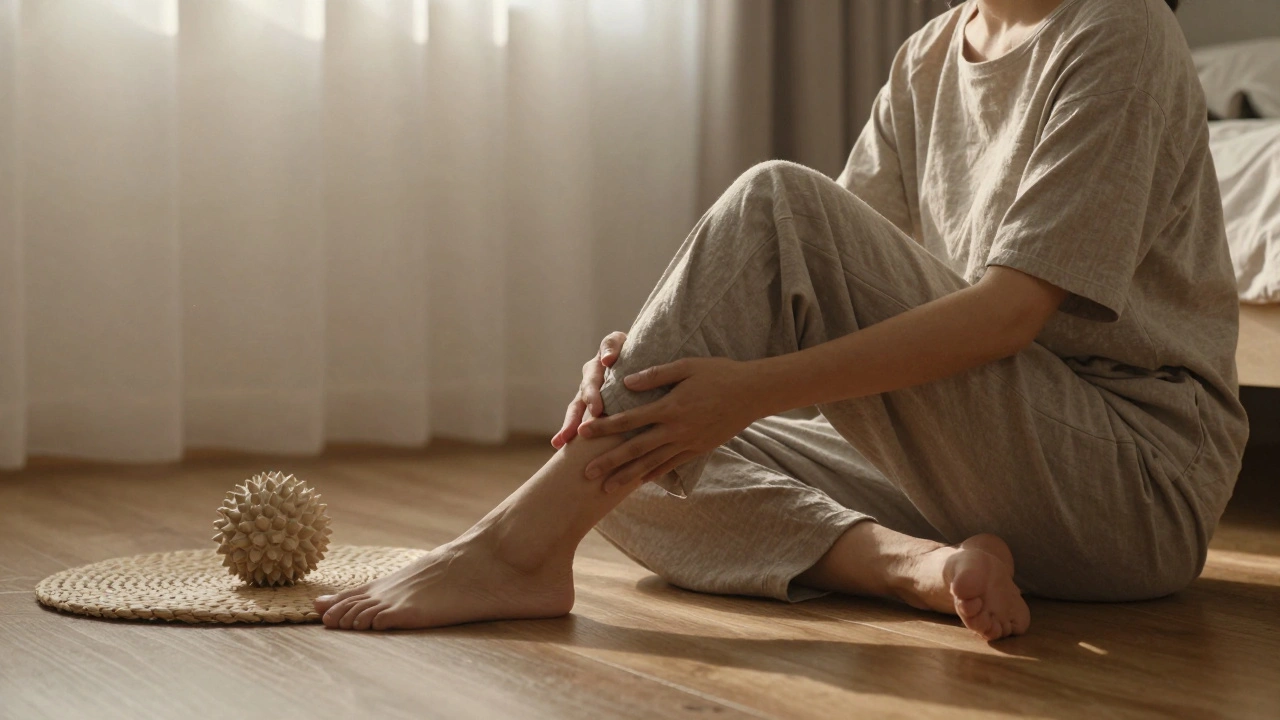
Thai massage works heavily on pressure points. You can replicate that with a small massage ball-tennis balls work too. Roll it under your foot while sitting. Feel the arch tense, then release. Do the same along your upper back, pressing the ball against a wall. Focus on the spots that hurt just enough to feel good. Spend 2 minutes on each side.
This targets the same sen lines used by Thai therapists. It’s like a mini session you can do while watching TV.
3. Try Partner-Assisted Stretching
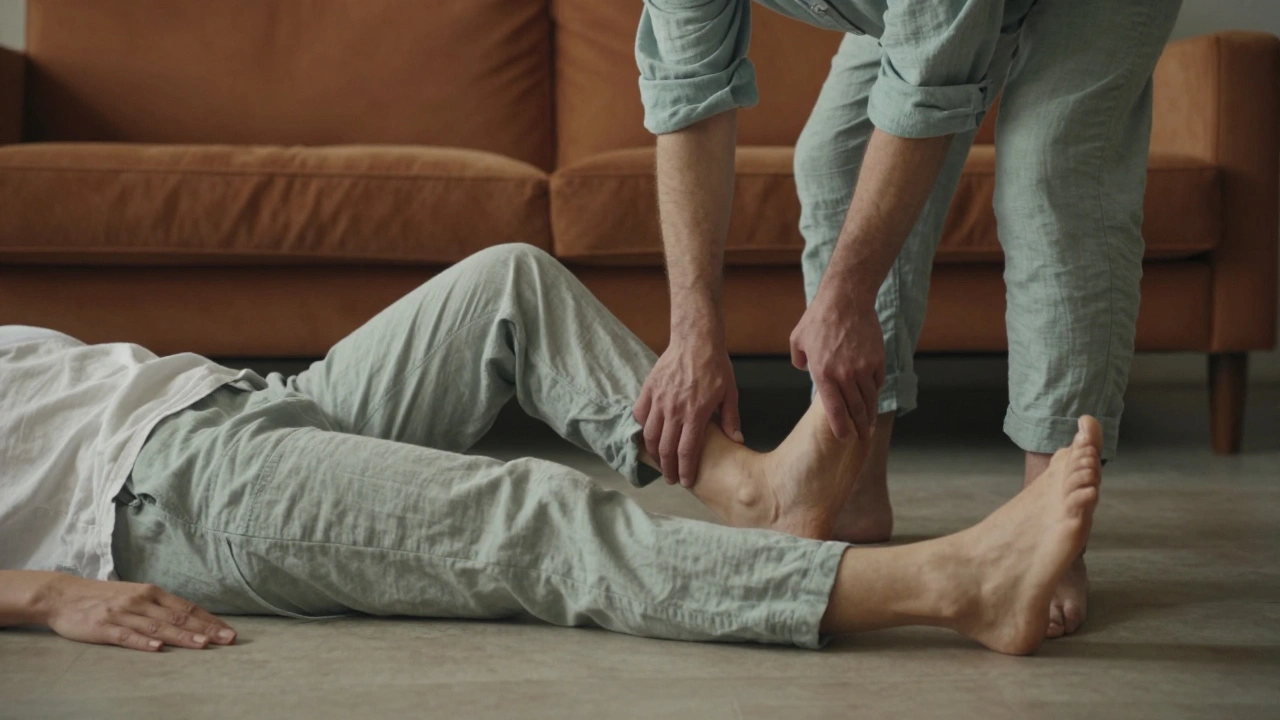
Ask a partner to help you with a simple leg stretch. Lie on your back. Have them gently hold your ankle and slowly straighten your leg, keeping your other foot flat on the floor. You relax. They guide. Hold for 30 seconds. Switch legs.
This is a direct copy of a classic Thai massage technique called ‘Leg Pulling.’ It opens the hamstrings and releases tension in the lower back. Bonus: it builds connection. Touch is healing.
4. End Your Day with the ‘Sleeping Child’ Pose
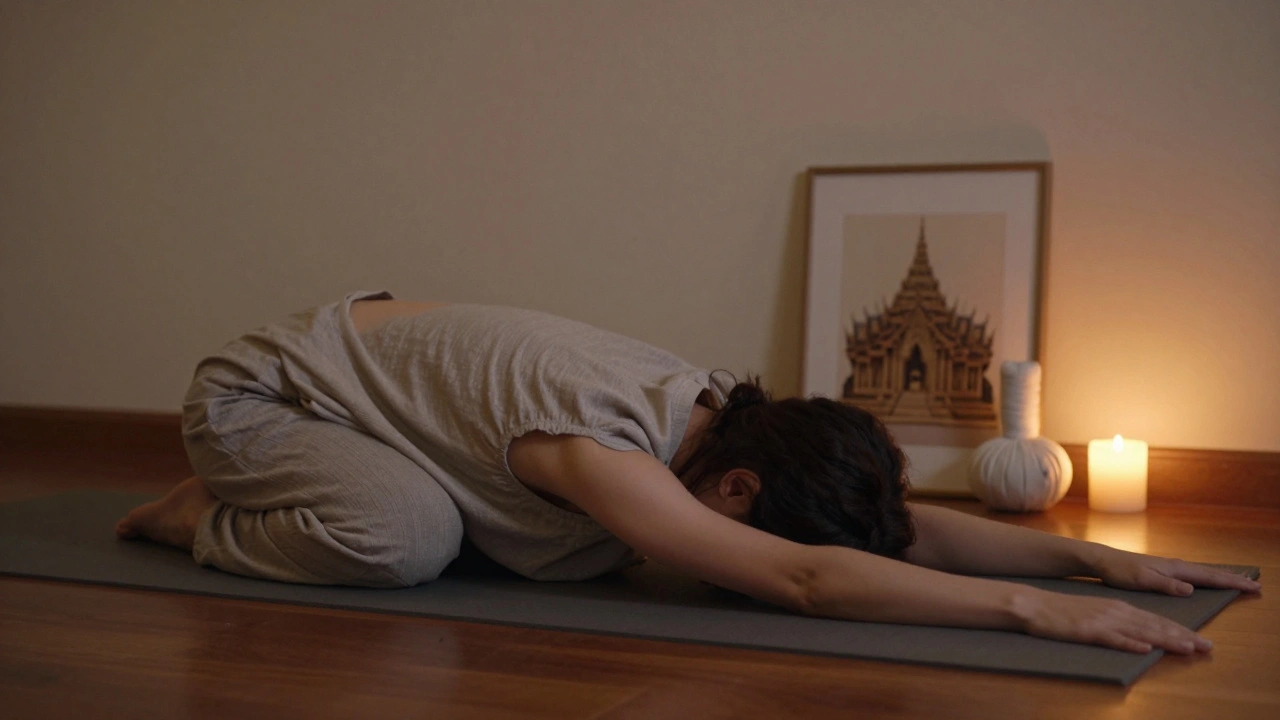
Get on your hands and knees. Let your hips sink back toward your heels. Rest your forehead on the floor. Arms stretched out in front. Breathe slowly. Stay here for 3-5 minutes.
This is called Balasana in yoga, but in Thai massage, it’s a restorative pose used to reset the nervous system. It’s the ultimate ‘reset button’ after a long day.
What to Expect During a Professional Thai Massage Session
If you decide to visit a studio, here’s what really happens.
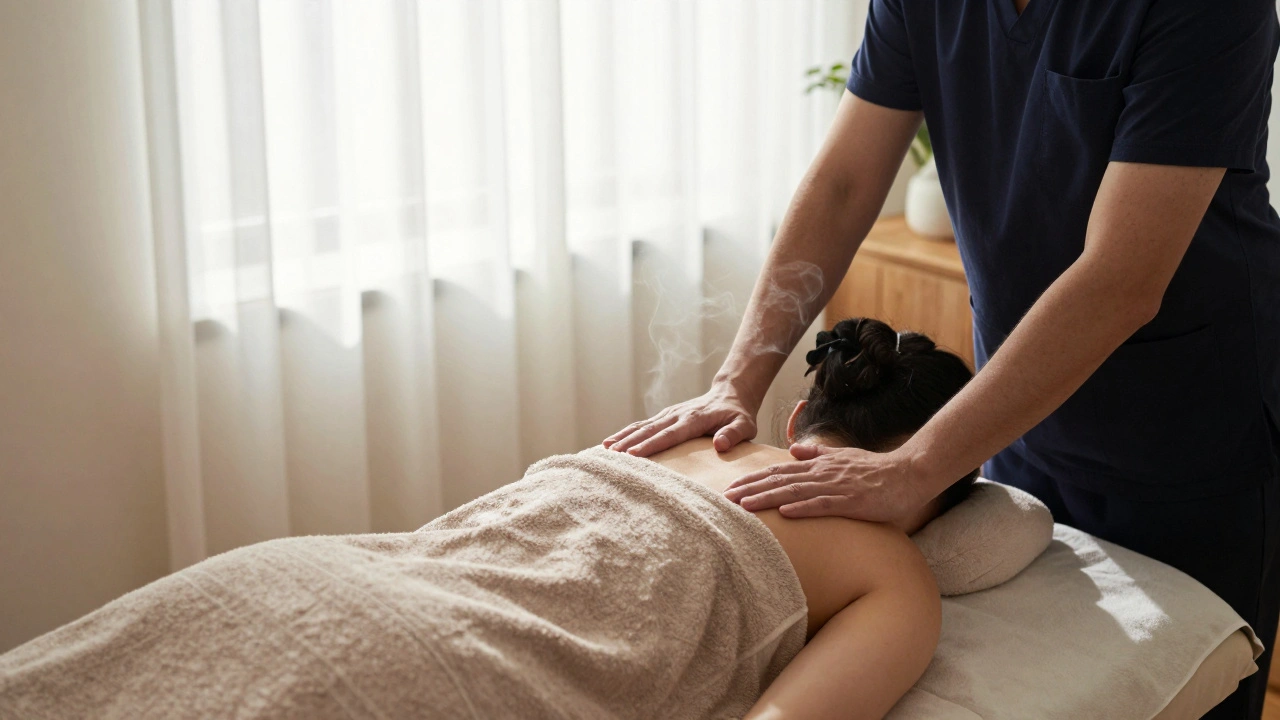
You’ll arrive in regular clothes-no need to change. The therapist will ask about any injuries or areas of tension. You’ll lie on a mat on the floor, not a table. They’ll start at your feet, working upward with rhythmic pressure. You might feel a stretch that makes you gasp-but it shouldn’t hurt. If it does, speak up. Good therapists adjust on the spot.
There’s no music unless you ask for it. No scents. Just movement, breath, and quiet focus. It’s not about luxury. It’s about function.
Afterward, you might feel a little sore, like after a good workout. That’s normal. Within a day, you’ll feel looser, clearer-headed, and more grounded.
Thai Massage vs. Swedish Massage: What’s the Difference?
| Feature | Thai Massage | Swedish Massage |
|---|---|---|
| Setting | Mat on floor | Massage table |
| Clothing | Loose, comfortable clothes | Undressed, covered with sheets |
| Techniques | Stretching, acupressure, compression | Long strokes, kneading, tapping |
| Oil or Lotion | No | Yes |
| Focus | Energy lines, mobility, posture | Relaxation, muscle tension |
| After Feel | Aligned, energized, slightly sore | Relaxed, sleepy, melted |
Swedish massage is like a warm blanket. Thai massage is like a reset switch. Both are good. But if you’re stuck in a posture loop from sitting all day, Thai massage fixes the root-not just the symptom.
How to Find Quality Thai Massage in London
London has dozens of Thai massage studios. But not all are created equal.
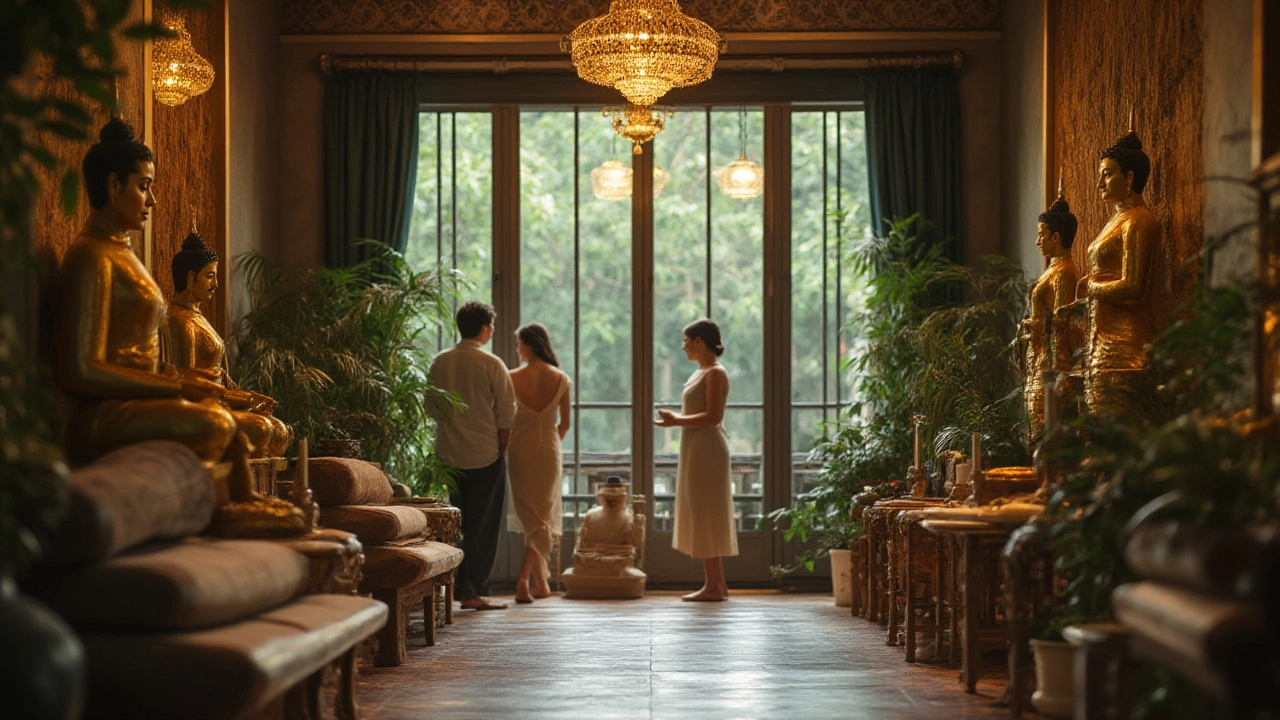
Look for places that train therapists in traditional Thai methods-not just ‘Thai-style’ massages with oils and music. Check if they mention Wat Pho Temple in Bangkok (the birthplace of Thai massage). That’s a good sign.
Top spots in London with authentic training include:
- Thai Massage London (Soho) - run by therapists trained in Chiang Mai
- Wat Pho UK (Camden) - direct lineage from Thailand’s original temple school
- Yoga & Thai Massage Studio (Islington) - combines yoga philosophy with traditional techniques
Read reviews that mention specific techniques-like ‘they stretched my hips’ or ‘they worked on my sen lines’-not just ‘it was relaxing.’ That’s the real deal.
How Often Should You Do Thai Massage?
If you’re using it for self-care, aim for one professional session every 3-4 weeks. That’s enough to maintain mobility and keep stress in check.
But the real power comes from daily micro-practices: 5 minutes of stretching, 2 minutes with a ball, a 3-minute breathing pause. Do those every day, and you’ll notice your body doesn’t tighten up as easily. You’ll sleep better. You’ll feel less reactive.
Think of it like brushing your teeth. You don’t wait until your tooth hurts to do it. You do it daily because you know the long-term payoff.
When to Avoid Thai Massage
Thai massage is safe for most people-but not everyone.
Avoid it if you have:
- Recent fractures or severe osteoporosis
- Deep vein thrombosis (blood clots)
- Open wounds or infections
- Severe disc herniation without clearance from a doctor
If you’re pregnant, ask for a prenatal Thai massage. Not all therapists offer this, so be clear about your needs.
Always tell your therapist about any health conditions. They’re not mind readers.
Frequently Asked Questions
Can I do Thai massage on myself?
Yes, you can do simple Thai-inspired stretches and acupressure on yourself. Focus on your feet, neck, shoulders, and hips. Use a massage ball, stretch gently, and breathe deeply. You won’t get the full depth of a professional session, but daily self-care adds up. Think of it as maintenance, not replacement.
Does Thai massage hurt?
It shouldn’t. You might feel a deep stretch that feels intense-but pain is a red flag. Thai massage works with your body’s limits, not against them. If you’re wincing, speak up. A good therapist will ease off. The goal is release, not punishment.
How long does a Thai massage session last?
Standard sessions are 60 or 90 minutes. For beginners, start with 60. You’ll still get the full range of benefits. Longer sessions are great if you’re dealing with chronic tension or want a deeper reset.
Do I need to be flexible for Thai massage?
No. Thai massage is for people who aren’t flexible. That’s why it works. The therapist gently guides you into stretches you can’t reach on your own. You don’t need to touch your toes. You just need to show up.
Is Thai massage worth the cost?
At £60-£90 per session, it’s more expensive than a basic massage-but it does more. It doesn’t just relax you; it fixes posture, improves movement, and reduces chronic tension. If you’ve tried foam rollers, yoga apps, and painkillers with little result, Thai massage might be the missing piece. Think of it as an investment in your daily comfort, not a luxury.
Ready to Feel Different?
You don’t need to wait for a holiday or a special occasion to take care of your body. Thai massage isn’t a one-time treat. It’s a daily conversation between you and your body. Start small-five minutes a day. Stretch. Breathe. Roll. Repeat.
One day, you’ll wake up and realize: your shoulders aren’t holding the weight of the world anymore. You’re not just relaxing. You’re rebuilding yourself-one gentle stretch at a time.

Raven Ridinger
December 19, 2025 AT 05:01Oh, wow. Another ‘ancient wisdom’ article that somehow forgot to mention that Thai massage was invented by monks who probably didn’t have health insurance-or running water. And now we’re supposed to believe that rolling a tennis ball under your foot is ‘authentic’? Please. I’ve seen more legitimate acupressure in a 99-cent Chinese reflexology pamphlet from 1997. Also-seriously? ‘Sen lines’? That’s not a medical term. That’s a Pinterest buzzword wrapped in incense smoke. And don’t get me started on the ‘partner-assisted stretching’-because nothing says ‘romantic evening’ like your SO yanking your leg while you scream into a pillow.
Timothy Chifamba
December 20, 2025 AT 05:54Man, this is actually solid. I’m from Nigeria, and we’ve had similar healing traditions for centuries-like the Yoruba ‘Ogboni’ bodywork and Igbo pressure point techniques. Thai massage? It’s the same energy. You don’t need a spa to feel it. I do the foot roll with a coconut shell when I’m tired after work. Five minutes. No cost. Just breathe. And yeah-the ‘sleeping child’ pose? That’s the real MVP. Do it before bed. Your spine will thank you. No fluff. Just real body work.
andre maimora
December 20, 2025 AT 18:43They’re lying. Thai massage is a CIA psyop designed to make Americans feel better about sitting at desks all day so they don’t question the system. The ‘sen lines’? Totally made up by the Thai royal family to distract people from their debt crisis. And don’t fall for the ‘massage ball’ nonsense-that’s just a Trojan horse for 5G frequency emitters disguised as tennis balls. They want you to think you’re healing yourself so you stop demanding real healthcare. Wake up. This is all part of the globalist wellness agenda. Also, no one needs to stretch. Just take more Adderall. Problem solved.
Delilah Friedler
December 22, 2025 AT 00:52I appreciate the practical approach outlined here, particularly the emphasis on daily micro-practices. While I have no personal experience with Thai massage, I have observed similar principles in physical therapy protocols used in rehabilitation settings. The integration of breath with movement, the focus on postural alignment, and the use of self-applied pressure techniques are all evidence-based strategies for managing chronic musculoskeletal tension. The suggestion to begin with five minutes daily is particularly thoughtful-it aligns with behavioral psychology principles around habit formation. I would only add that consistency matters more than duration, and that tracking progress-perhaps with a simple journal-can reinforce long-term adherence.
Sloan Leggett
December 22, 2025 AT 11:16You missed a comma after ‘breathing exercises.’ Also, ‘sen lines’ is not capitalized correctly in the heading. And you used ‘you’ll’ instead of ‘you will’ in three places-this isn’t a text message. This is supposed to be an educational article. Also, why are you recommending a tennis ball? That’s unhygienic. Use a lacrosse ball. And who gave you permission to call Balasana ‘the sleeping child pose’? That’s not even the proper name. You’re not helping. You’re misleading people with sloppy writing and pseudo-science. Fix this.
George Granados
December 22, 2025 AT 12:24I’ve been doing the foot roll with a golf ball for three years now and honestly it changed my life. I used to wake up with plantar fasciitis so bad I could barely walk. Now? Barely even think about it. I do it while watching Netflix. No big deal. My wife started doing the spinal twist with me and now we do it every morning like a little ritual. It’s not about being flexible or spending money. It’s about showing up for your body every day like you would for a friend. You don’t need a therapist to know when your shoulders are screaming. You just need to listen. And maybe a ball. And five minutes. That’s it. I used to think I was too busy. Turns out I was just too stubborn. Now I’m just… lighter. Like I forgot I was carrying bricks for ten years. And I didn’t even know it.