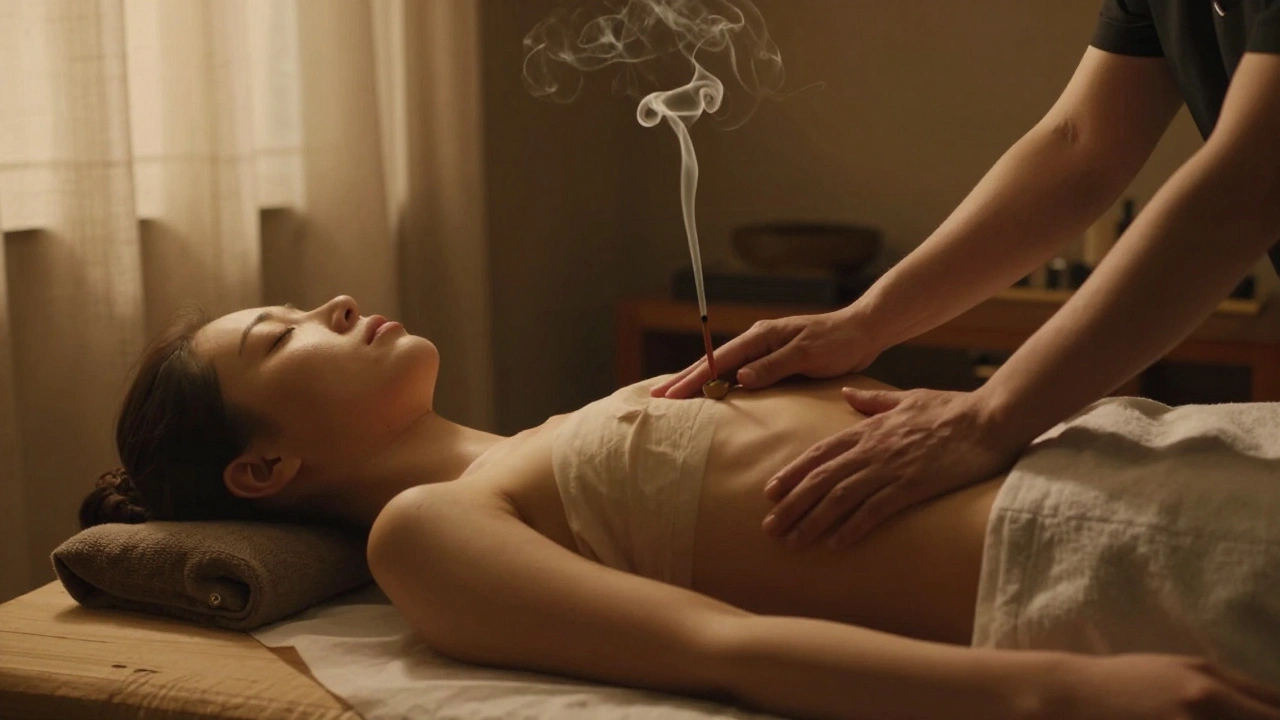
You’ve probably heard that tantric massage isn’t just about touch. But what really makes it different from a regular massage? It’s not the candles, the oils, or even the slow strokes. It’s the breath.
Why Breathwork Is the Hidden Engine of Tantric Massage
Imagine trying to drive a car with the engine off but still pressing the gas pedal. That’s what tantric massage feels like without breathwork. The hands move, the skin glides, the energy seems to be there-but something’s missing. That missing piece? Your breath.
Tantric massage doesn’t aim to just relax your muscles. It’s designed to awaken your nervous system, open your energy channels, and reconnect you with your body in a way that feels deeply alive. And breath is the bridge between your mind and your body. Without conscious breathing, you’re just getting a slow, sensual rubdown. With it, you’re stepping into a space where time slows, sensations multiply, and emotional release becomes possible.
This isn’t new-age fluff. Ancient tantric texts like the Vijñāna Bhairava Tantra list breath control as one of the primary methods to access higher states of awareness. Modern neuroscientists now confirm it: slow, rhythmic breathing activates the parasympathetic nervous system, lowers cortisol, and increases heart rate variability-key markers of deep relaxation and emotional safety. In tantric massage, that safety is what lets you let go completely.
What Breathwork Actually Looks Like in a Session
It doesn’t mean hyperventilating or chanting. It’s not about forcing deep belly breaths if your body resists. Real breathwork in tantric massage is subtle, responsive, and guided by sensation.
Here’s how it unfolds in a typical session:
- The practitioner might gently place a hand on your lower belly and say, “Notice how your breath moves here. Let it be soft, like a wave coming in and out.”
- As they work along your spine, they’ll pause and wait-just a few seconds-until your breath naturally deepens. That pause isn’t awkward; it’s intentional. It gives your body space to catch up with the sensation.
- If you tense up during a sensitive area, they won’t push. They’ll whisper, “Breathe into the tightness. Let the air soften the edge.” And slowly, without you even realizing it, the tension melts.
Some practitioners use synchronized breathing-matching their own rhythm to yours. You don’t have to copy them. You just have to notice. That’s the magic. It’s not about doing it right. It’s about becoming aware.
The Science Behind Breath and Sensory Expansion
Why does breathing make touch feel more intense? Because your nervous system interprets breath as a signal of safety. When you breathe slowly and fully, your body stops guarding itself. Your skin becomes more sensitive. Your nerve endings open up. What felt like light pressure before now carries warmth, tingling, even a faint electric buzz.
A 2023 study from the University of London’s Centre for Mindfulness Research found that participants who practiced conscious breathing during sensual touch reported 47% higher levels of bodily awareness and 32% greater emotional connection compared to those who didn’t. The effect was strongest in areas typically held tense-hips, lower back, chest.
In tantric massage, this isn’t just about pleasure. It’s about reclaiming parts of yourself you’ve numbed out. Maybe you’ve learned to disconnect from your body after stress, trauma, or years of living in your head. Breathwork gently invites you back.
How Breathwork Differs From Other Massage Techniques
Let’s compare:
| Feature | Tantric Massage | Swedish Massage | Deep Tissue | Erotic Massage |
|---|---|---|---|---|
| Primary Goal | Energy flow, emotional release, presence | Relaxation, muscle relief | Chronic tension release | Sexual arousal, stimulation |
| Role of Breath | Central-guided, conscious, synchronized | Passive-no instruction given | Passive-focused on pain tolerance | Occasional-only if used to heighten arousal |
| Body Awareness | High-designed to expand sensation | Moderate-focused on comfort | Low-focused on release | Variable-often limited to genital focus |
| Emotional Component | Strong-tears, laughter, stillness common | Minimal | Minimal | Often avoided |
| Duration of Effect | Hours to days-shifts in mood and presence | Minutes to hours | Hours | Minutes-fades with orgasm |
Notice the difference? Tantric massage doesn’t treat the body like a machine to be fixed. It treats it like a living, breathing map of your inner world. And breath is the compass.
What to Expect in Your First Breath-Integrated Tantric Session
If you’ve never done this before, you might expect something mystical or overwhelming. It’s not. Most sessions start quietly.
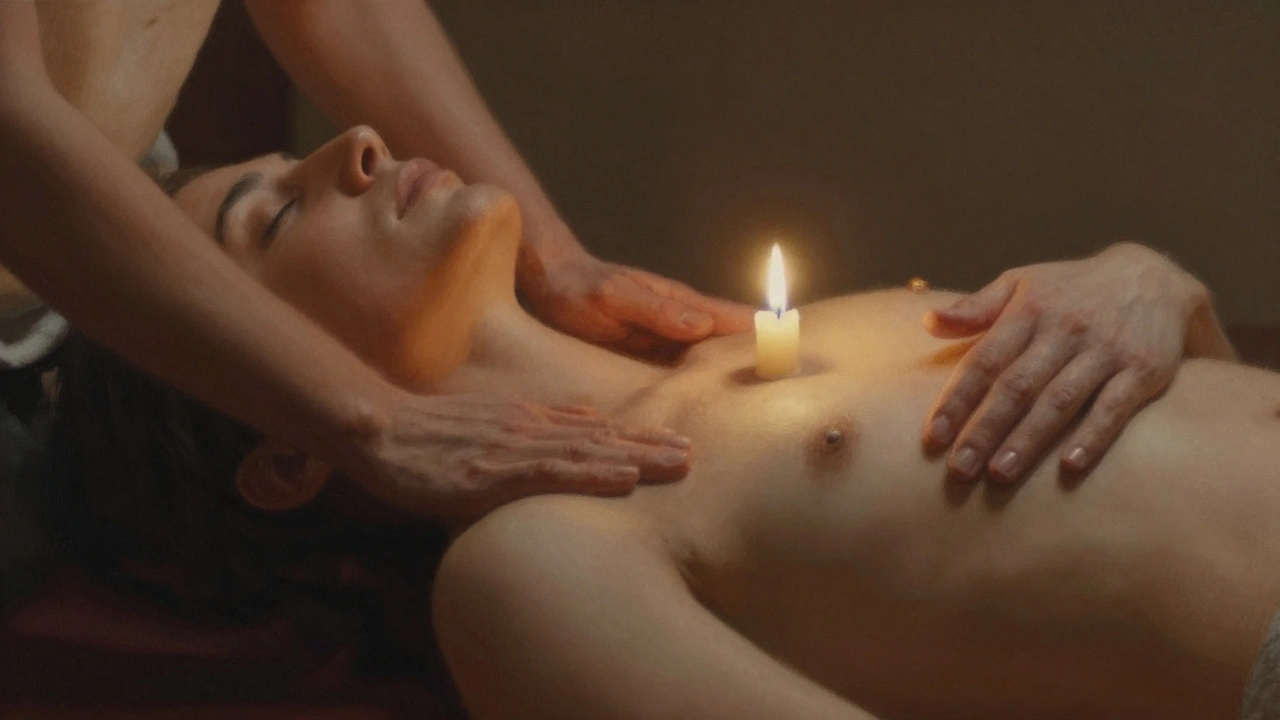
You’ll lie on a warm mat, covered lightly. The room is dim, with soft music or silence. The practitioner won’t rush. They’ll ask you to close your eyes and take three slow breaths-just to settle in. Then they’ll begin, slowly, with your feet or shoulders.
At first, you might think, “Is this it?” But as the touch lingers, and they gently remind you to breathe into your ribs, something shifts. Maybe you feel warmth spreading from your lower back. Maybe you remember a memory you hadn’t thought of in years. Maybe you cry without knowing why.
That’s not unusual. Breathwork lowers psychological defenses. It lets buried emotions rise-not to overwhelm you, but to be held. The practitioner won’t try to fix it. They’ll just stay present, breathing with you.
By the end, you won’t feel like you’ve had a massage. You’ll feel like you’ve come home to your body.
How to Find Authentic Breathwork-Integrated Tantric Massage in London
Not every “tantric massage” includes real breathwork. Some are just slow sensual touch with incense. Here’s how to tell the difference:
- Ask directly: “Do you incorporate conscious breathing as part of the session?” If they say, “Oh, we just focus on touch,” walk away.
- Look for training: Authentic practitioners often train with lineage-based teachers-like those from the OneTao or Shakti Tantra traditions. They’ll mention this on their website or in consultations.
- Check for space: Sessions should last at least 90 minutes. Anything shorter rarely allows time for breath to deepen and shift the energy.
- Trust your gut: If the environment feels rushed, clinical, or overly sexualized, it’s not tantric. It’s erotic. Tantric spaces feel sacred, not seductive.
In London, studios in Camden, Islington, and Notting Hill tend to host practitioners with deeper training. Look for reviews that mention “emotional release,” “stillness,” or “felt my breath move through me.” Those are the real signs.
What You Can Do to Prepare
You don’t need to be a yogi. But a few simple things help:
- Don’t eat heavily 2 hours before.
- Turn off your phone. Seriously. Even if you think you’ll be “just in case,” you won’t be present.
- Wear loose clothing to the session. You’ll change into a towel or robe, but arriving relaxed sets the tone.
- Set an intention-not a goal. Instead of “I want to orgasm,” try “I want to feel safe.”
And if you feel awkward? Good. That means you’re human. The breath will meet you there.

Safety and Boundaries
Tantric massage is not sex. It’s not meant to lead to intercourse. It’s meant to lead to awareness. That’s why boundaries are non-negotiable.
Reputable practitioners will:
- Have a clear consent process before the session starts
- Never touch genitals unless explicitly agreed upon (and even then, it’s rare)
- Allow you to stop at any time, no questions asked
- Not pressure you to “go deeper” or “let go”
If someone says, “You’ll feel amazing if you just relax more,” that’s a red flag. Real breathwork doesn’t require you to perform. It asks you to be.
Frequently Asked Questions
Can breathwork in tantric massage help with anxiety?
Yes. Many people come to tantric massage specifically because they feel disconnected from their bodies after chronic stress. The combination of slow, intentional touch and guided breathing activates the vagus nerve, which calms the fight-or-flight response. People often report feeling calmer for days after. It’s not a cure, but it’s a powerful reset button.
Do I have to be spiritual to benefit from this?
No. You don’t need to believe in chakras, energy fields, or karma. All you need is curiosity. If you’re willing to notice how your breath changes when someone touches your back, you’re already doing the work. The rest is just language to describe what your body already knows.
Will I orgasm during the session?
Sometimes. Sometimes not. Orgasm isn’t the goal. But when breath and touch are aligned, your body may naturally release pleasure-sometimes as a full orgasm, sometimes as a wave of warmth, sometimes just a sigh. If it happens, it’s a side effect of deep relaxation, not the point.
How many sessions do I need to feel a difference?
Some people feel shifted after one session. Others need three or four. It depends on how much tension you carry and how open you are to feeling. Think of it like learning to swim. The first time, you might just float. The second, you’ll kick. The third, you’ll start moving forward. Consistency matters more than intensity.
Is tantric massage only for couples?
No. In fact, most people who try it are single. It’s a deeply personal practice, not a romantic one. Many come to reconnect with themselves after a breakup, loss, or burnout. The relationship here is between you and your body-not with another person.
Ready to Breathe Deeper?
Tantric massage isn’t about getting off. It’s about getting back-to yourself, to your breath, to the quiet hum of your own aliveness. If you’ve spent years numbing out, rushing, doing, this might be the gentlest way to come home.
Start small. Book one session. Lie down. Breathe. Let the touch be the invitation. And see what your body remembers when it’s finally allowed to be still.