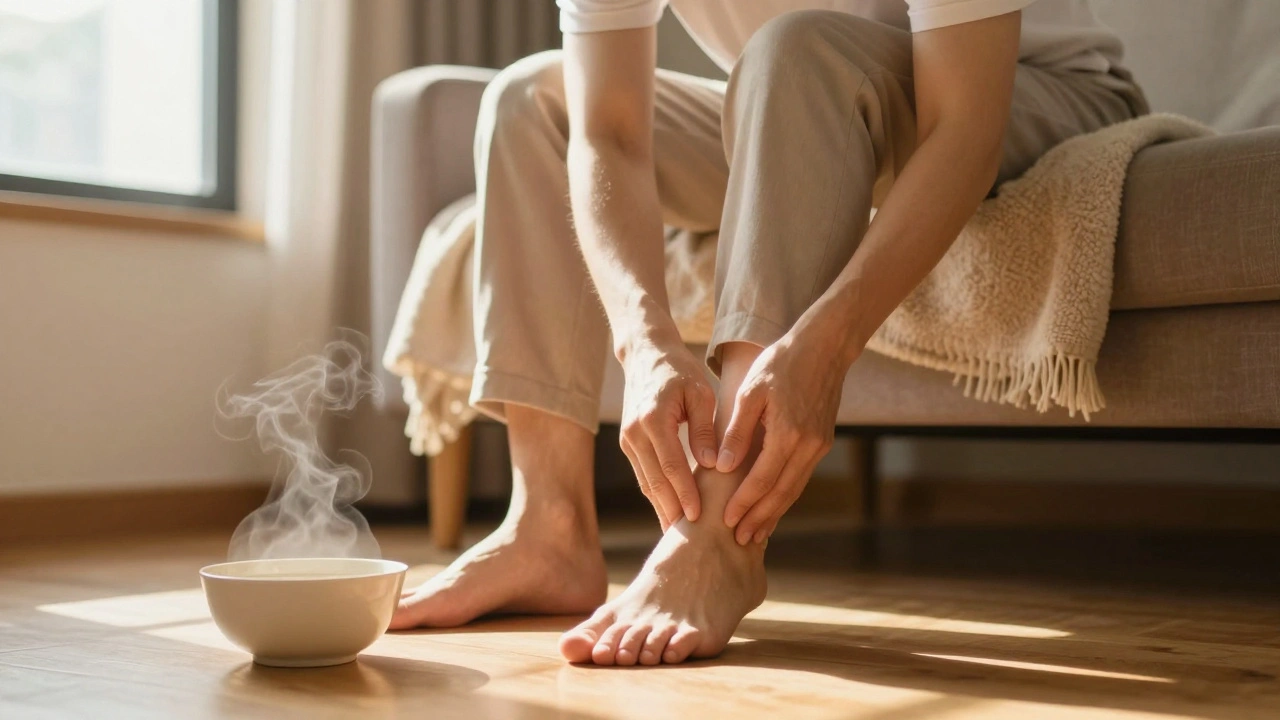
Why Your Feet Deserve More Than a Quick Stretch
You’ve stood all day. Walked through crowded streets. Worn shoes that pinch. Maybe you’ve even run a marathon-or just chased kids around the house. And now? Your feet feel like they’ve been through a war. But here’s the truth: your feet aren’t just support beams. They’re full of nerves, pressure points, and connections to every part of your body. A good foot massage doesn’t just feel nice-it rewires how you feel overall.
What Exactly Is Foot Massage?
Foot massage isn’t just rubbing your soles. It’s a targeted practice that uses pressure, stretching, and rhythmic movements to release tension in the muscles, tendons, and connective tissues of the feet. Rooted in ancient traditions like Chinese reflexology and Ayurveda, it’s based on the idea that specific zones on the feet link to organs and systems in the body. Press a spot near the ball of your foot? You might be stimulating your lungs. Rub the inner arch? That’s your spine. It’s not magic-it’s neurology. Your feet have over 7,000 nerve endings. When you stimulate them, you send calming signals straight to your brain.
Why Foot Massage Works (And Why You Need It)
Think about your daily life. You’re on your feet more than you realize. Even if you sit at a desk, your posture shifts, your weight moves, and your feet compensate. Over time, that builds up tightness, inflammation, and even pain. A 2023 study in the Journal of Bodywork and Movement Therapies found that people who got regular foot massages reported a 40% drop in foot pain and a 35% improvement in sleep quality within four weeks. That’s not a fluke. The massage triggers the parasympathetic nervous system-the one that says, “You’re safe now.” Your heart rate slows. Your breathing deepens. Cortisol, the stress hormone, drops. You start to feel like you’re floating.
And it’s not just about pain. People with diabetes, arthritis, or even anxiety find relief. For diabetics, improved circulation means fewer numbness episodes. For those with plantar fasciitis, consistent massage reduces morning heel pain. And for anyone stuck in a cycle of stress? A 15-minute foot rub can be the reset button your mind didn’t know it needed.
Types of Foot Massage You Can Try
- Reflexology: Focuses on pressure points tied to organs. Practitioners use thumb-walking techniques to map out zones. Great if you want to target specific systems like digestion or sleep.
- Swedish Foot Massage: Uses long strokes, kneading, and circular movements. Ideal for general relaxation and muscle tension.
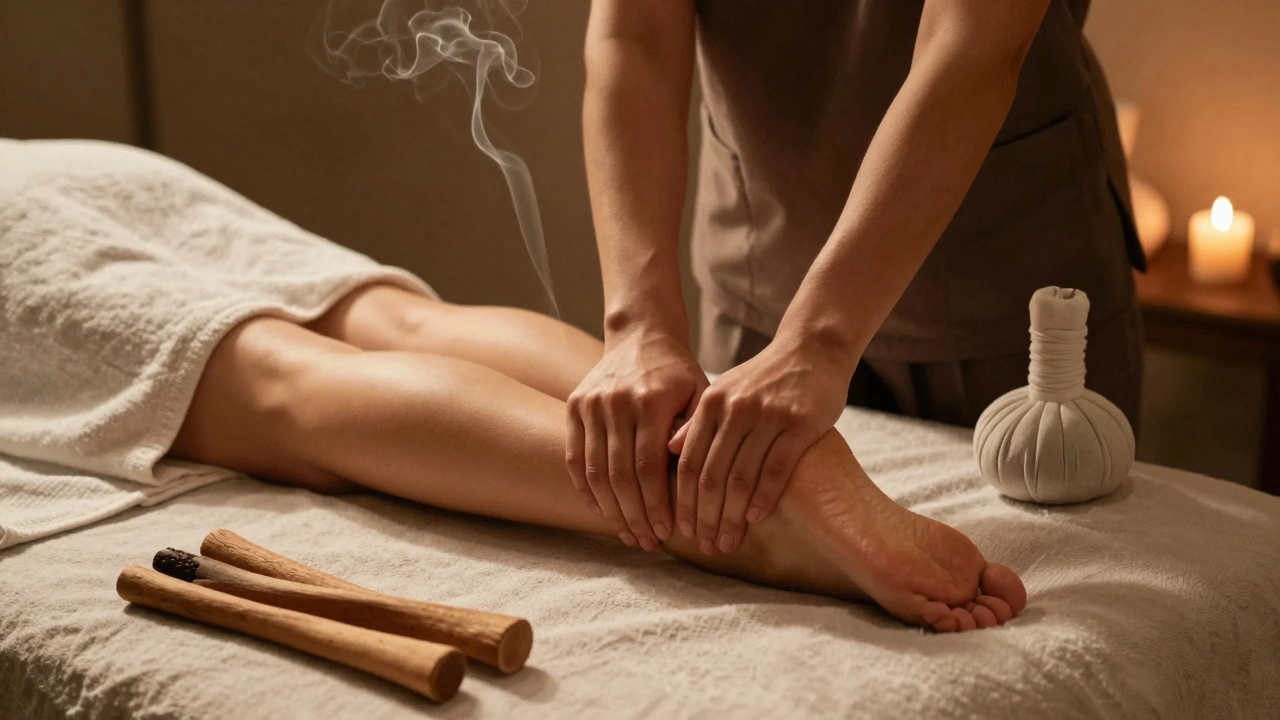
- Thai Foot Massage: Combines acupressure, stretching, and yoga-like movements. Often done with wooden sticks and herbal compresses. More intense, but deeply effective.
- Self-Massage: You don’t need a professional. A tennis ball, foam roller, or even your thumbs can work wonders at home.
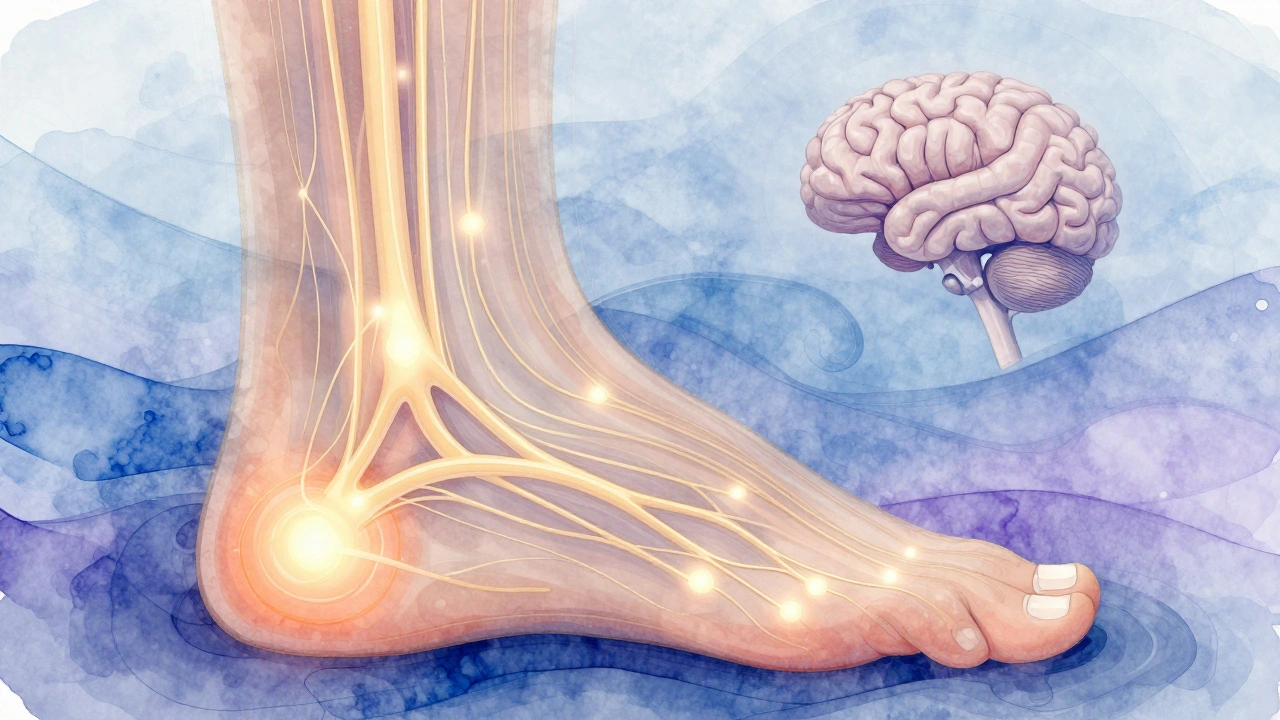
How to Do a Foot Massage at Home (No Tools Needed)
You don’t need a spa to get results. Here’s a simple routine you can do in under 10 minutes:
- Find a quiet spot. Sit in a chair. Remove shoes and socks.
- Warm your hands. Rub them together to generate heat.
- Start at the heel. Use your thumbs to press and circle slowly. Work your way to the ball of the foot.
- Pinch each toe gently. Pull slightly, then release. Do this for 10 seconds per toe.
- Use your knuckles to roll along the arch. Apply firm but comfortable pressure.
- Finish by squeezing the entire foot like you’re wringing out a towel. Do this 3 times.
Do this before bed, after work, or even while watching TV. Consistency beats intensity. Five minutes daily beats one hour once a month.
What to Expect During a Professional Session
If you’re heading to a spa or clinic, here’s what usually happens:
- You’ll sit in a reclining chair or lie on a table.
- They’ll clean your feet and may use warm towels or oils (lavender, peppermint, or coconut are common).
- The therapist will start with light strokes to relax you, then move into deeper pressure.
- You might feel tingling, warmth, or even a slight ache in spots-that’s the tension releasing.
- Most sessions last 30 to 60 minutes. You’ll leave feeling lighter, calmer, and oddly taller.
Good therapists ask you to rate pressure on a scale of 1 to 10. Don’t be shy-tell them if it’s too much. You’re not being rude. You’re helping them help you.
Foot Massage vs. Foot Soaks: Which Is Better?
| Feature | Foot Massage | Foot Soak |
|---|---|---|
| Primary Benefit | Relieves muscle tension, improves circulation, triggers nerve response | Softens skin, reduces odor, temporary relaxation |
| Duration of Relief | Hours to days | Minutes to an hour |
| Works on Pain | Yes-especially plantar fasciitis, heel spurs | Only surface-level comfort |
| Stress Reduction | Strong-activates nervous system | Mild-mostly sensory |
| Cost (per session) | $40-$100 | $5-$20 (at home) |
Soaks are nice. But if you want real change-less pain, better sleep, lower stress-massage wins. Soaks are the warm blanket. Massage is the deep tissue reset.
When to Skip Foot Massage
It’s safe for most people. But avoid it if you have:
- An open wound, infection, or severe rash on your feet
- Deep vein thrombosis (DVT) or blood clots
- Recent foot surgery (wait at least 6 weeks)
- Severe osteoporosis or fragile bones
If you’re pregnant, talk to your doctor first. Some reflexology points can stimulate contractions. A trained therapist will know which areas to avoid.
How to Find a Good Foot Massage Therapist
Not all massage therapists are trained in foot work. Look for:
- Certification in reflexology or podiatric massage
- Reviews mentioning specific results (e.g., “reduced my heel pain”)
- Clean, calm environment with disposable linens
- Willingness to adjust pressure and explain what they’re doing
Ask if they use oils or lotions-some people have allergies. Bring your own if you’re unsure. And don’t go to someone who pushes you into expensive packages right away. A good therapist wants you to feel better, not buy more sessions.
Real People, Real Results
Sarah, 52, a teacher, used to dread standing in front of her class. “My feet felt like bricks,” she says. After six weekly foot massages, she stopped taking ibuprofen for pain. “I sleep through the night now. I didn’t think something so simple could change my life.”
Mark, 38, a warehouse worker, tried foot massage after his doctor warned him about early signs of diabetic neuropathy. “I was numb from the ankles down. After three months of twice-weekly sessions, I could feel the grass again.”
Final Thought: Your Feet Carry You. Give Them Back Their Peace
They’ve carried you through every step of your life. The long walks. The late nights. The races, the runs, the endless errands. It’s time to give them something back-not just a new pair of shoes, but real care. A foot massage isn’t a luxury. It’s a repair. A reset. A quiet rebellion against the grind.
You don’t need to book a week at a spa. Just start with five minutes today. Sit down. Take off your shoes. And press your thumb into the center of your foot. Breathe. Feel it. That’s the first step to tranquility.
Can foot massage help with insomnia?
Yes. Foot massage stimulates the parasympathetic nervous system, which lowers cortisol and raises melatonin levels. A 2022 study showed participants who received daily 20-minute foot massages for two weeks fell asleep 30% faster and reported deeper sleep. It’s a natural, drug-free way to calm an overactive mind.
How often should I get a foot massage?
For general maintenance, once a week is ideal. If you’re dealing with chronic pain, stress, or a medical condition like diabetes, twice a week for 4-6 weeks can make a big difference. After that, taper to once every 1-2 weeks. Even monthly sessions offer noticeable benefits.
Is reflexology scientifically proven?
The exact organ-foot maps in reflexology aren’t fully supported by modern anatomy. But the effects are real. Studies confirm that pressure on the feet reduces pain, improves circulation, and lowers stress. It’s not magic-it’s neurology. Your feet are packed with nerves. Stimulating them sends signals to your brain that calm your whole body.
Can I do foot massage if I have flat feet?
Absolutely. In fact, people with flat feet often benefit the most. Gentle massage helps loosen tight calf muscles and plantar fascia, which are usually overworked in flat-footed individuals. Avoid aggressive rolling over the arch if it’s painful-focus on the heel and ball of the foot instead.
Do I need special oils or tools?
No. Your hands are the best tool. If you want to add something, coconut oil or almond oil work well-they’re non-greasy and moisturizing. A tennis ball or frozen water bottle can help roll out tight spots. But you don’t need gadgets. Just pressure, time, and consistency.
Why does foot massage sometimes hurt?
It’s not supposed to hurt-but it can feel tender. That’s because tight muscles or trigger points are being released. Think of it like a knot in a rope. Pressing it feels uncomfortable at first, but then it loosens. If it’s sharp or shooting pain, stop. Mild discomfort that fades after a few seconds is normal. Sharp pain means you’re pressing too hard or there’s an injury.



Sarah Fleming
February 3, 2026 AT 03:34Foot massage isn't just therapy-it's a quiet act of rebellion against a world that demands we keep moving, keep performing, keep enduring… and then, when we collapse, tells us to 'just stretch it out.'
Seven thousand nerve endings? That's not anatomy-that's a symphony waiting to be played.
And yet, we treat our feet like afterthoughts-shoved into shoes like guilty secrets.
Maybe the real miracle isn't the massage… it's that we still have feet left to massage.
We’ve forgotten how to listen to our bodies… but our feet? They never stopped screaming.
And now, finally, we’re learning to hear them.
That’s not wellness.
That’s redemption.